With streaming services and subscriptions taking over the internet, we now have endless movies to watch from the comfort of our own homes whenever we like. Still, it rarely compares to seeing a film on the big screen, where dimmed lights, powerful projectors, and booming speakers make you fully appreciate the craft behind it.
Except… not all movie theaters are built the same. On X, after one user shared a painfully awkward cinema they visited to watch Sentimental Value, others quickly followed with their own photos, showing just how bad some theaters can really get. Scroll down to see the hilariously painful results.
Discover more in 27 Theater Visits That Were Memorable For All The Wrong Reasons
Click here & follow us for more lists, facts, and stories.
#1

© Photo: JoeStokowski
#2
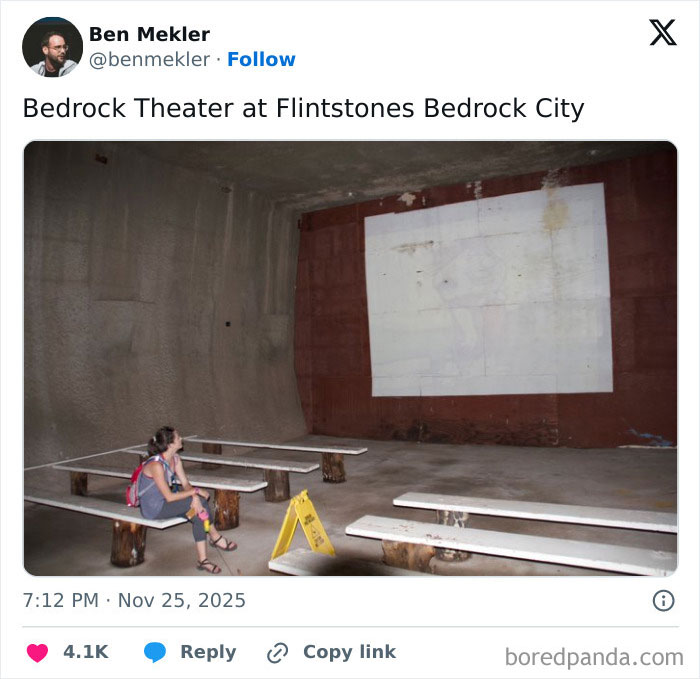
© Photo: benmekler
These cinemas might not look very practical, and they’re certainly not the kind of places you’d expect a flawless screening experience from. Still, I’d happily visit them. Not because they’re great, but because they’re memorable in their own way.
Sometimes a little grit only adds to the story. And when it comes to stories, the history of movie theaters is a fascinating one.
#3
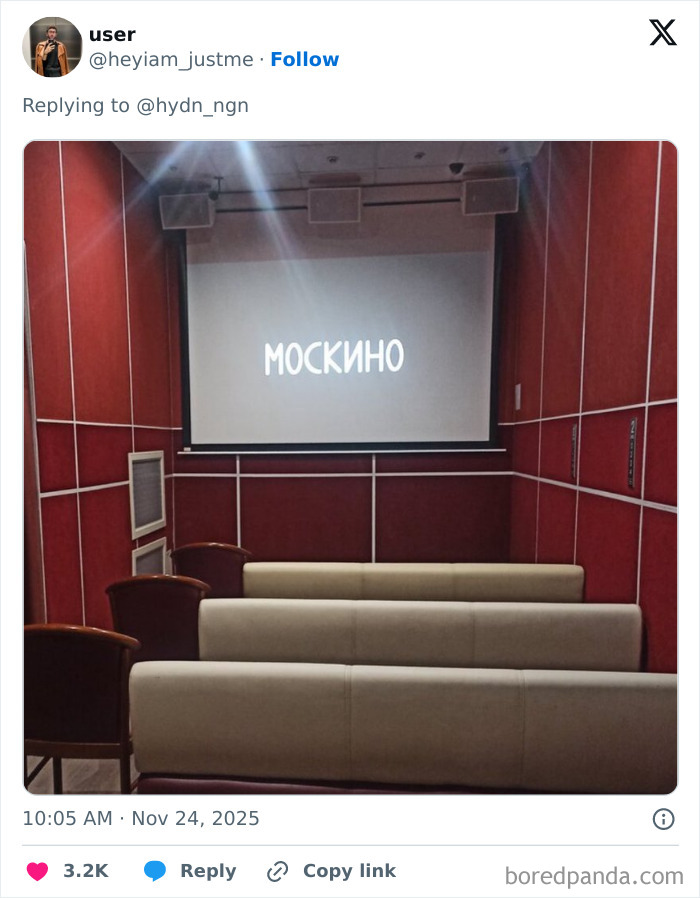
© Photo: heyiam_justme
#4
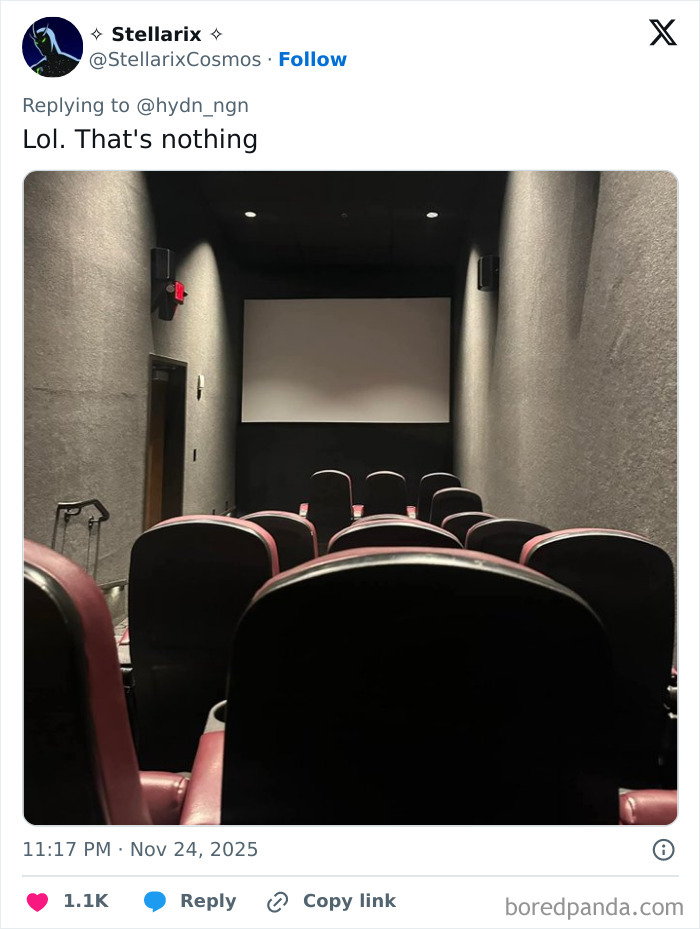
© Photo: StellarixCosmos
Long before movies as we know them existed, people were already gathering in darkened spaces to watch moving images. In 1799, in Paris, a man named Étienne-Gaspard “Robertson” staged eerie ghost shows inside abandoned ruins near a graveyard, using magic lantern projections to scare and amaze his audiences.
Decades later, in London, the Royal Polytechnic Institution turned magic lantern shows into a massive attraction, filling a 500-seat hall with oversized projected images. These early shows weren’t quite films yet, but they laid the groundwork for what was coming next.
#5

© Photo: BlakeRemasters
#6
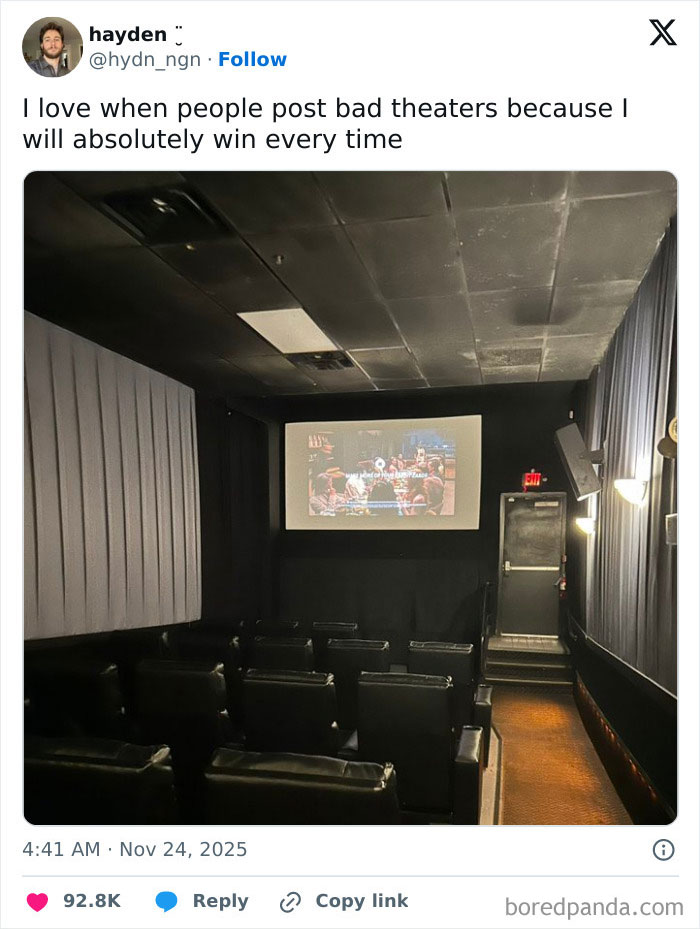
© Photo: hydn_ngn
#7
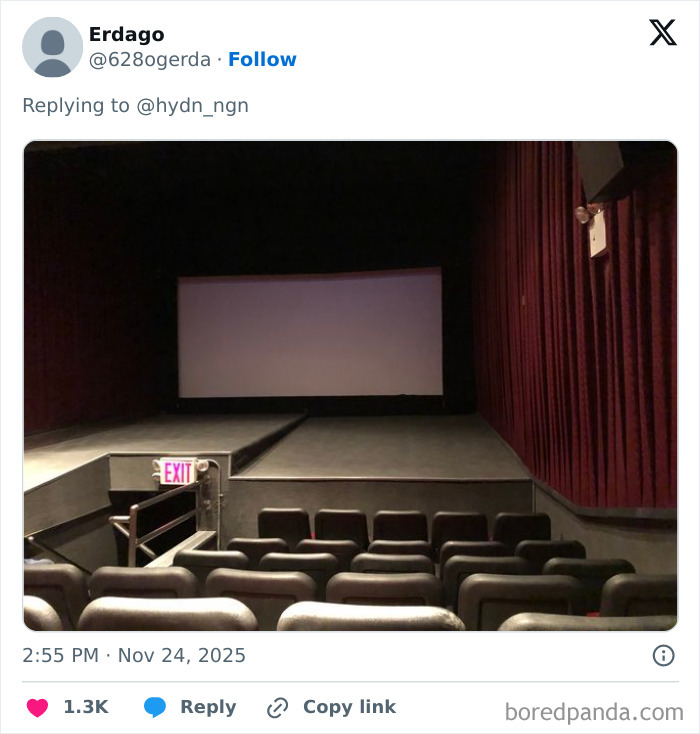
© Photo: 628ogerda
By the mid-1800s, things started to feel even closer to cinema. In Vienna, Austrian magician Ludwig Döbler presented one of the first public screenings of projected animation in 1847, drawing sold-out crowds across Europe.
In Paris, the famous cabaret Le Chat Noir became known for its shadow plays, using light and silhouettes to tell visual stories. People were clearly fascinated by moving images, even before cameras fully entered the picture.
#8
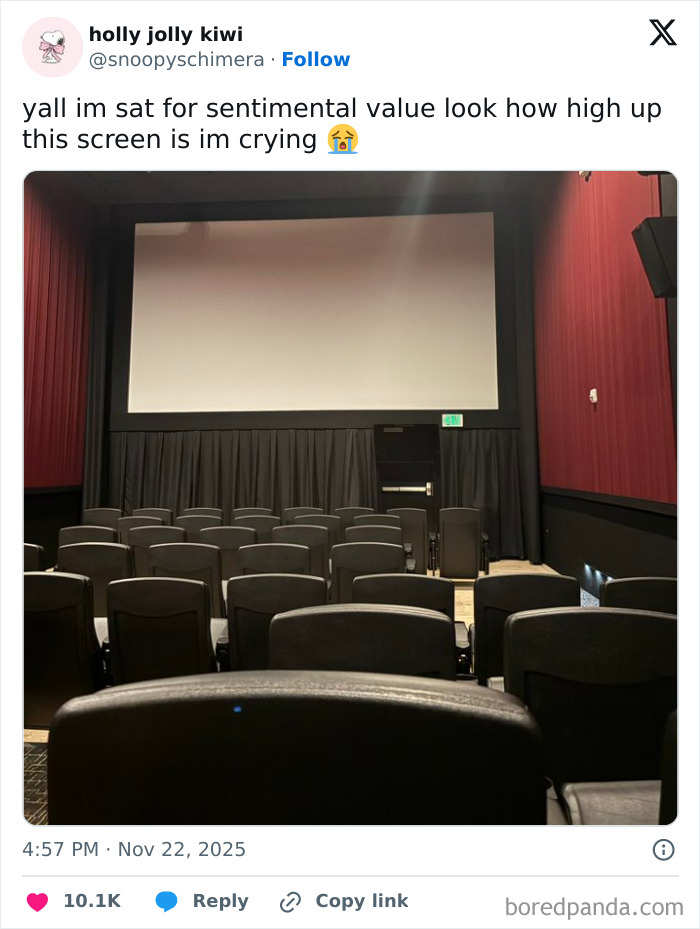
© Photo: snoopyschimera
#9
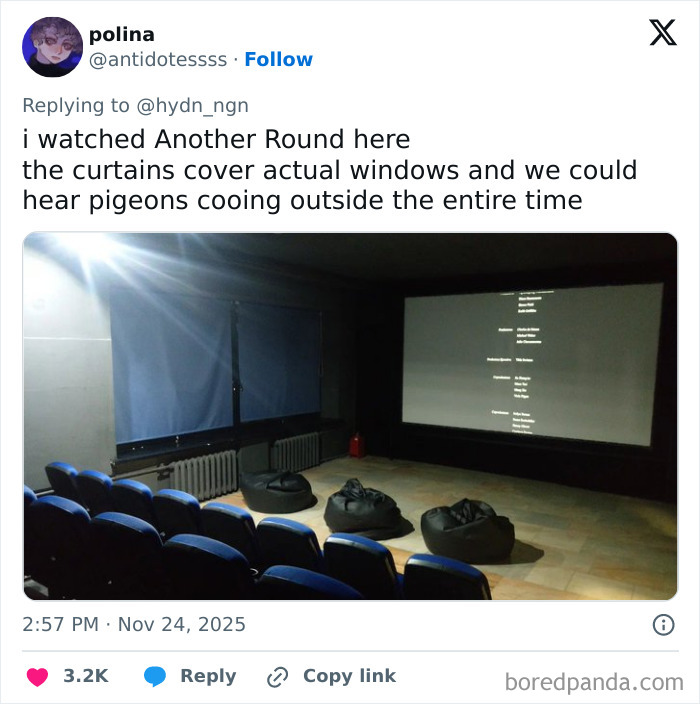
© Photo: antidotessss
#10
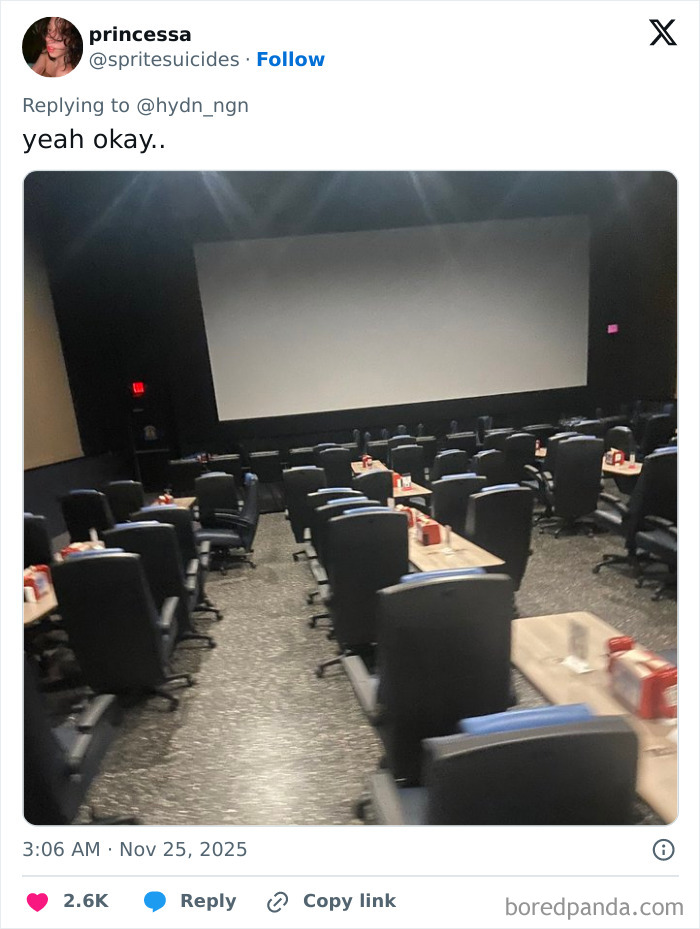
© Photo: spritesuicides
When motion pictures finally arrived in the late 1800s, there weren’t any dedicated movie theaters yet. Films were shown in regular theaters, museums, and storefronts that could simply be darkened.
In Paris, inventor Émile Reynaud screened his animated films thousands of times at the Musée Grévin in the 1890s. In the United States, Thomas Edison initially thought films would be watched by one person at a time through peephole machines called Kinetoscopes. One of the first public movie spaces in New York was actually a parlor lined with ten of these machines, each showing a different short film.
#11
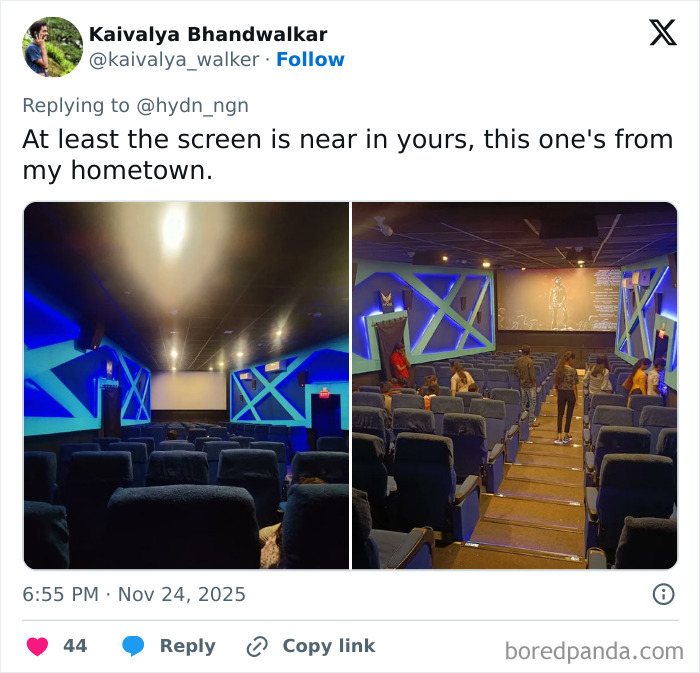
© Photo: kaivalya_walker
#12

© Photo: Hogiebear1989
#13
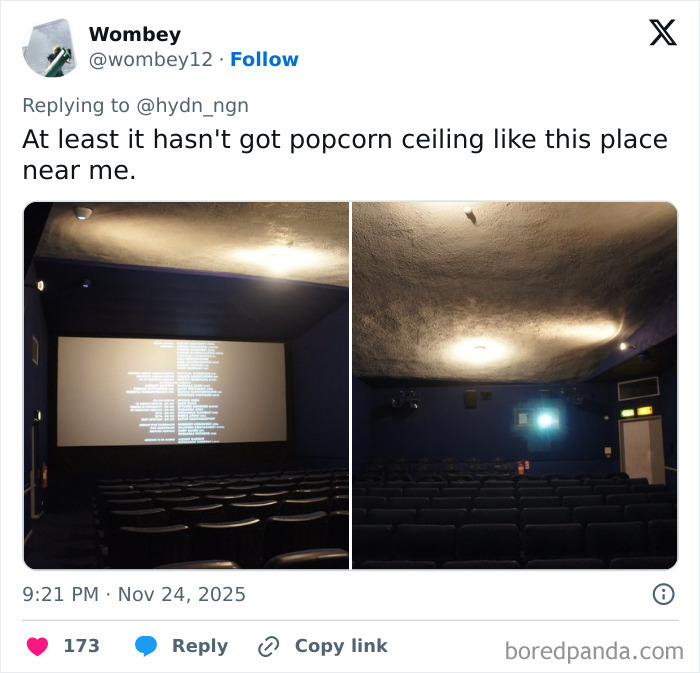
© Photo: wombey12
Everything changed in 1895, when the Lumière brothers held the first true public film screening with projected images in the basement of the Grand Café in Paris. Around the same time, filmmakers in Germany were showing moving pictures in large venues like Berlin’s Wintergarten Theatre.
Suddenly, watching films became a shared experience, and the demand exploded. It didn’t take long before people realized that movies needed their own dedicated spaces.
#14
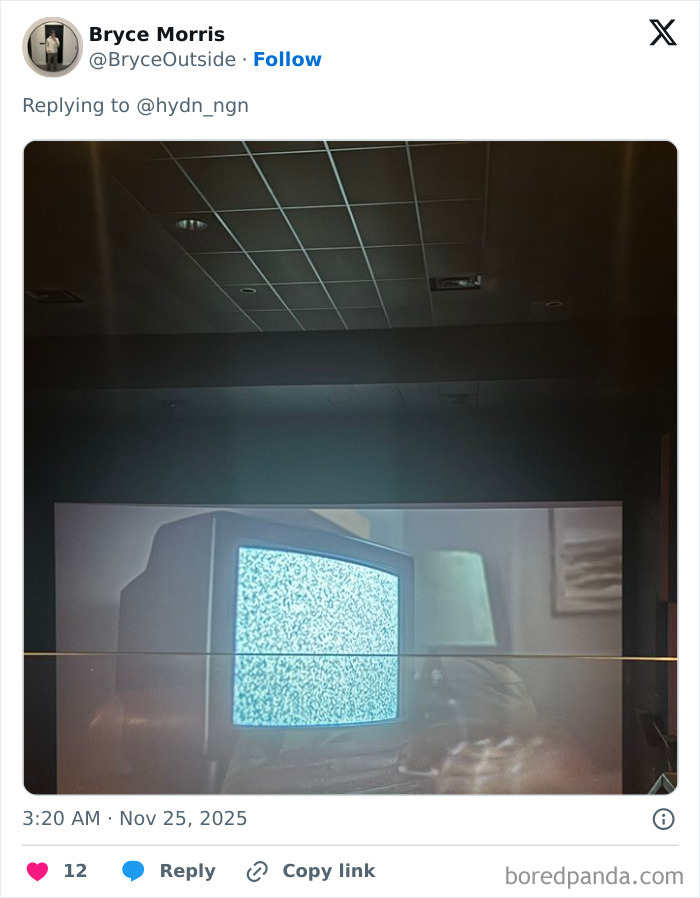
© Photo: BryceOutside
#15
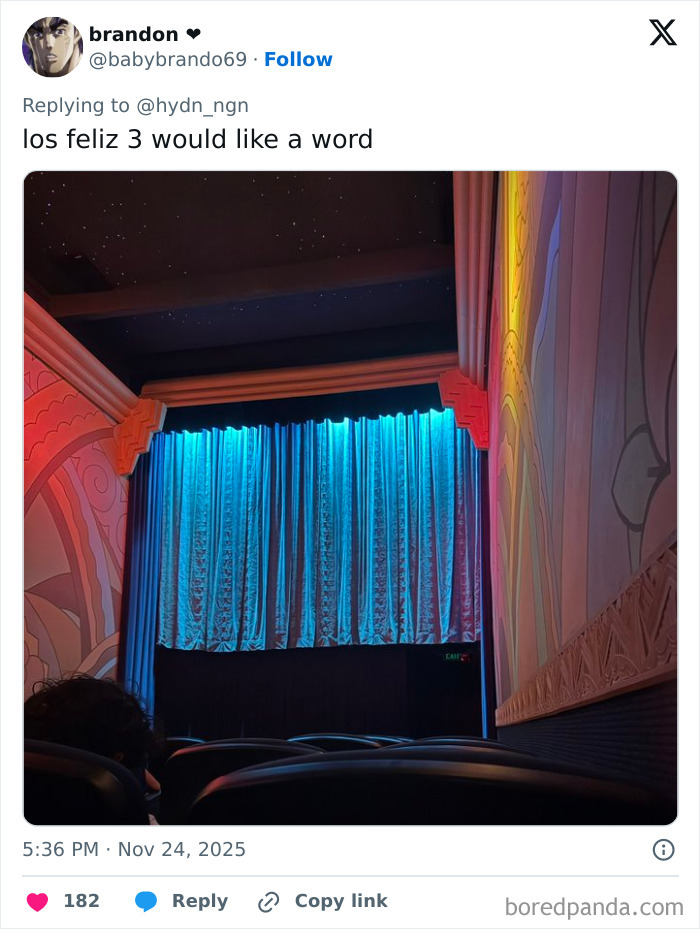
© Photo: babybrando69
#16
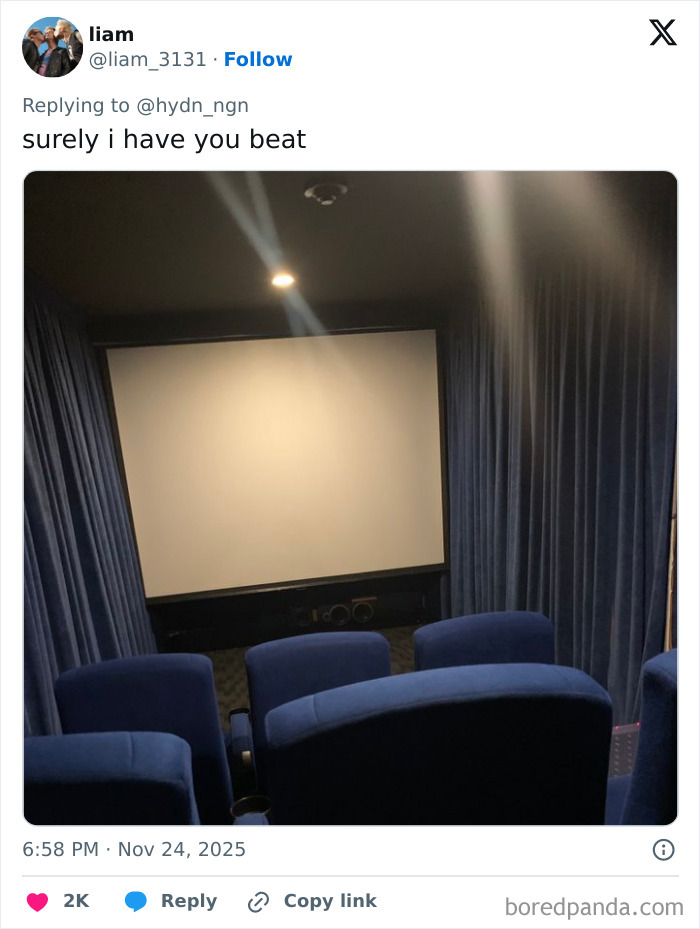
© Photo: liam_3131
The early 1900s marked the birth of purpose-built movie theaters. Some of the oldest still traceable ones opened in France, Slovenia, Denmark, and the United States.
In America, many early cinemas were simple storefronts that charged just five cents for a ticket, earning them the nickname “nickelodeons.” They were small, basic, and often cramped, but for many people, they were their first taste of going to the movies.
#17

© Photo: RigbyGender
#18
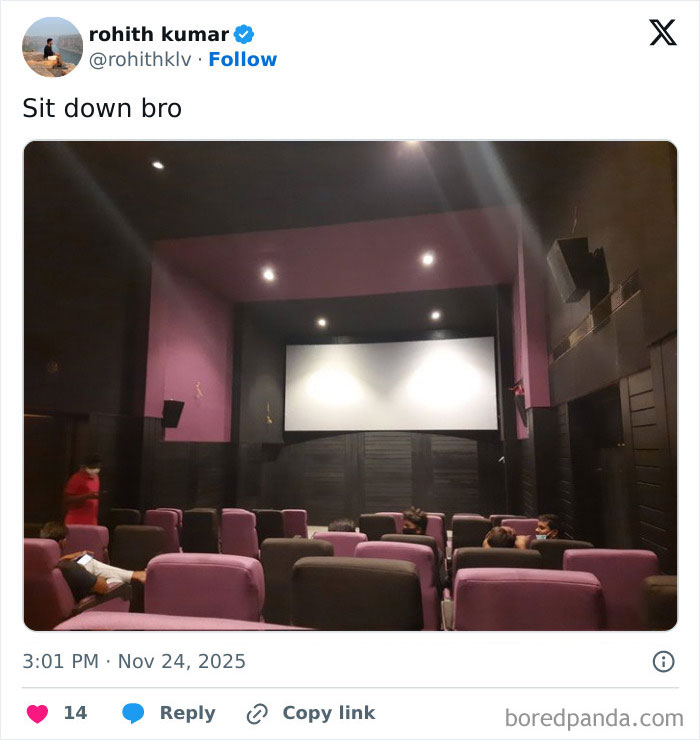
© Photo: rohithklv
#19
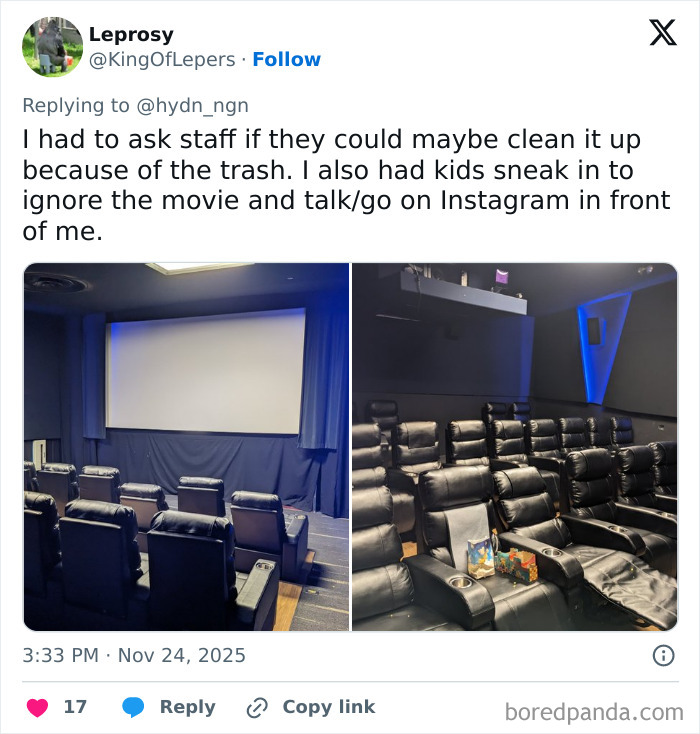
© Photo: KingOfLepers
As films grew longer and more popular, cinemas evolved too. The basic layout we still recognize today started taking shape: a foyer with a ticket booth, rows of padded seats, and a large screen at the front. Some theaters even had balconies, with softer, wider seats sold at a higher price.
Designers began thinking more seriously about sightlines, sound, and comfort, which slowly turned going to the movies into a full-fledged evening outing rather than just a quick novelty.
#20
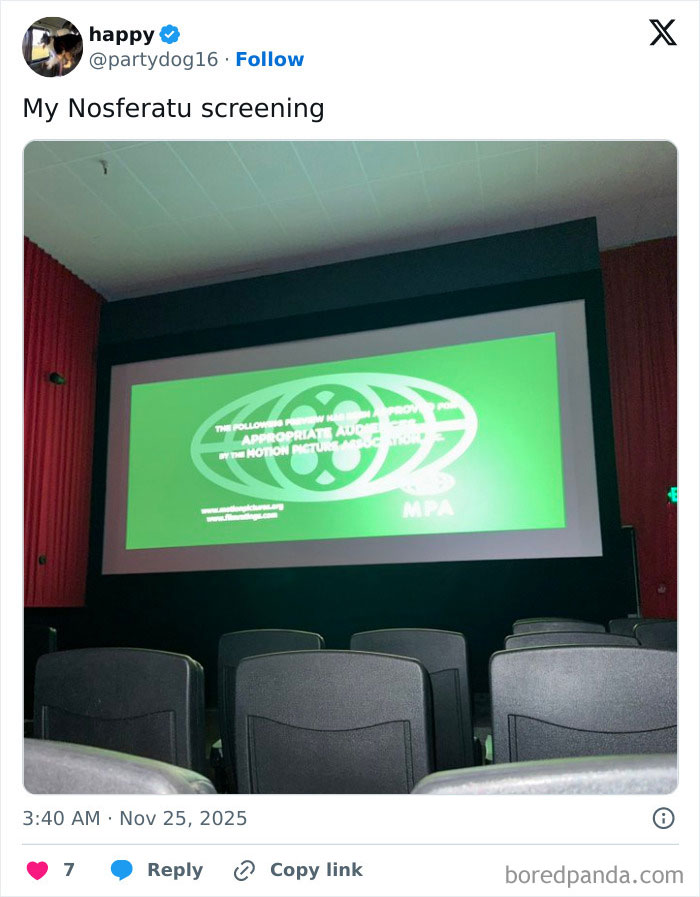
© Photo: partydog16
#21
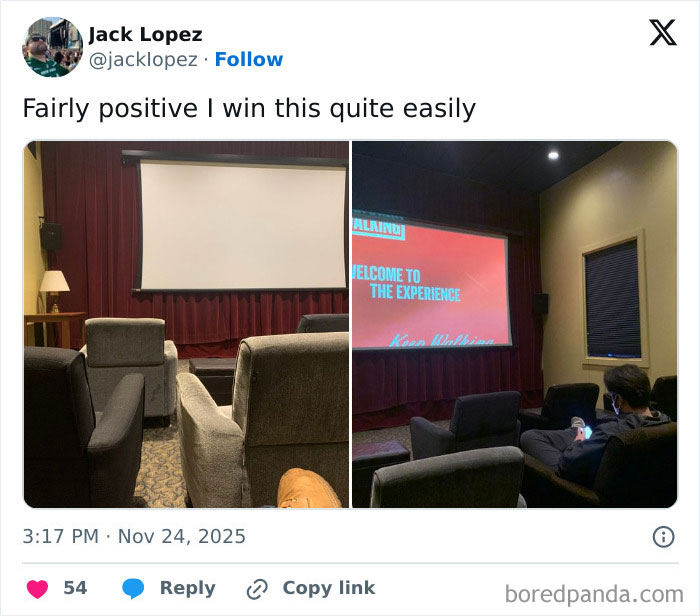
© Photo: jackIopez
#22
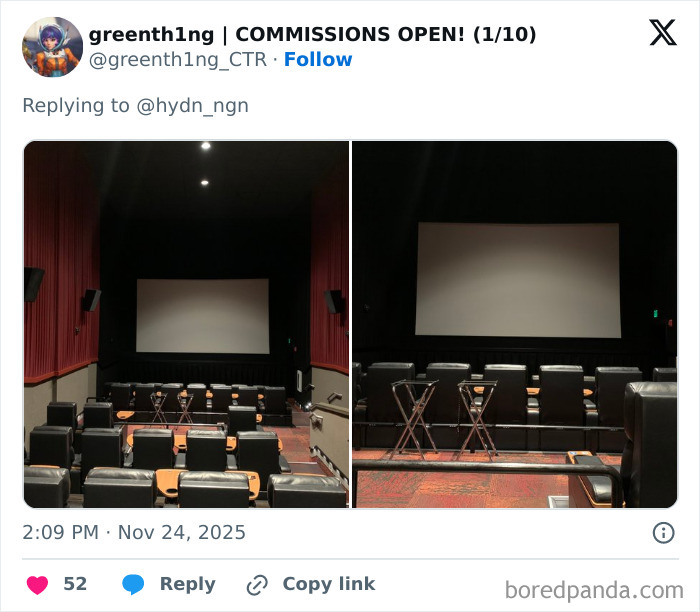
© Photo: greenth1ng_CTR
One major leap in theater design came with the introduction of stadium seating, which actually dates back as early as the 1920s. Instead of flat floors, rows were raised step by step, giving everyone a clear view of the screen.
This idea later became standard in modern multiplexes and IMAX theaters. Aisle lights, stepped walkways, and accessible seating for wheelchairs all followed as part of making theaters more practical and inclusive.
#23
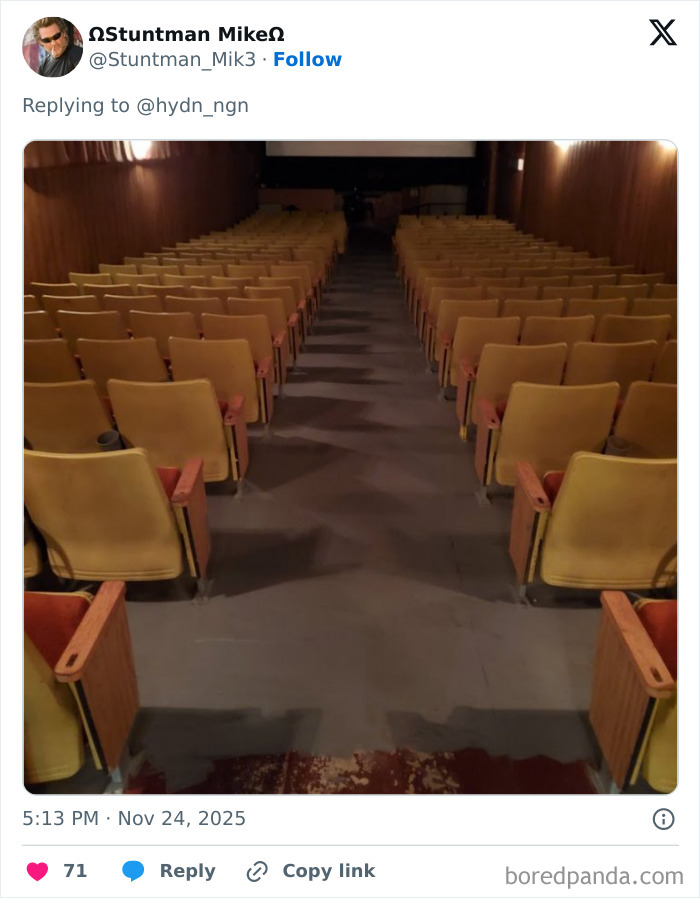
© Photo: Stuntman_Mik3
#24
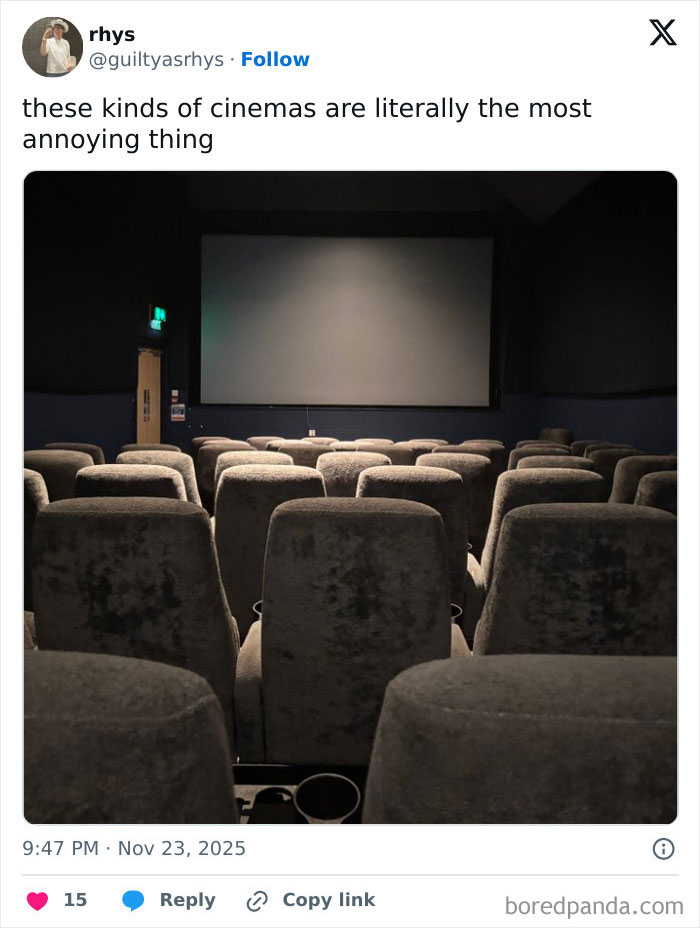
© Photo: guiltyasrhys
#25

© Photo: corncobtime
And yet, despite all this careful planning and centuries of evolution, this lineup of images proves that not every movie theater ends up all high-tech and polished. Still, just like those early theaters grew out of experiments and humble beginnings, many local cinemas today are doing their best to keep that tradition alive.
So even if a theater is a little rough around the edges, it might still be worth showing it some love. And if nothing else, it’ll at least give you a funny story to tell after your visit.
#26
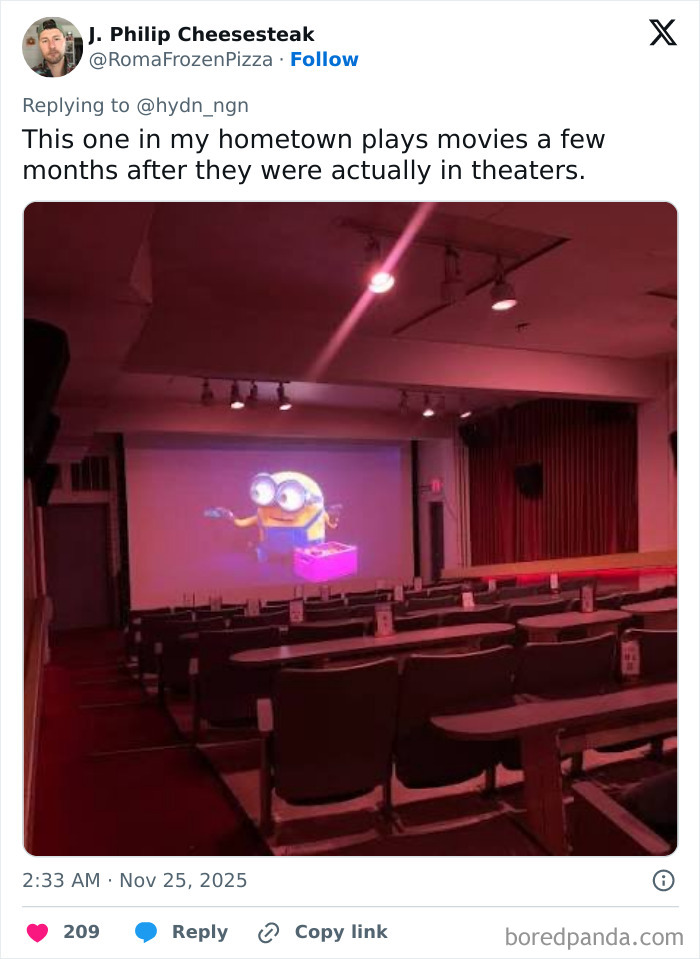
© Photo: RomaFrozenPizza
from Bored Panda https://ift.tt/awYMxvo
via Boredpanda


